Skip to content

FD503 material applications

Energy-storage converters

Energy-storage converters can use FD503 around auxiliary supplies and magnetics.

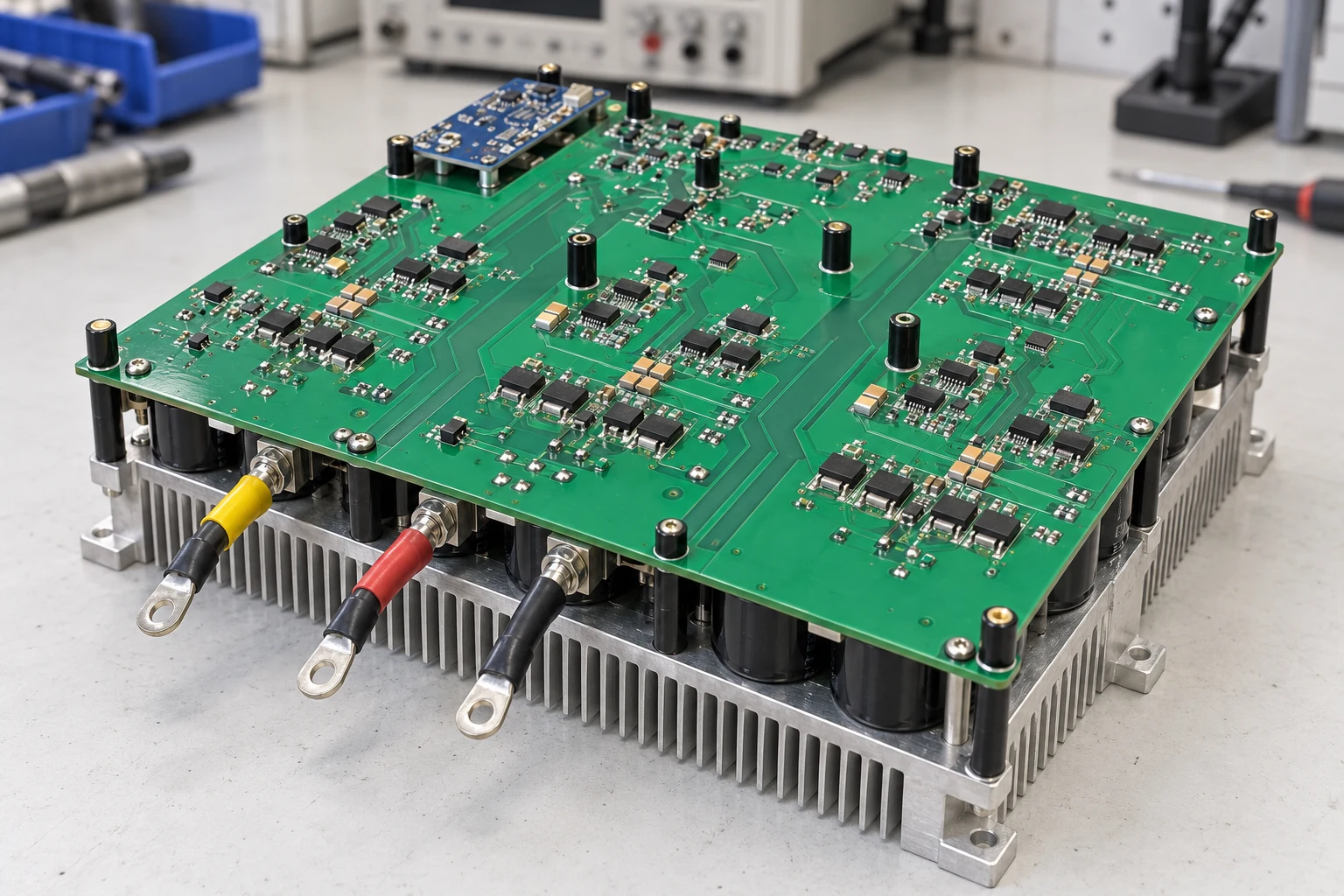
Three-phase converter circuit assembly with a finned heat sink and disconnected phase leads on an engineering bench
Illustrative image: potential FD503 application.

Material supply

FD503 grades

Full grade comparison

FD503-TG30

TG30 has thermal conductivity of at least 3.0 W/m·K for magnetics near cooled metal. Its higher-viscosity mix needs open passages around the components.

Thermal conductivity
≥3.0 W/m·K
Mixed viscosity
8,000-15,000 cps
Working time
At least 30 min

FD503-TG20

TG20 is an option for auxiliary inductors. Shore 00 and Shore A have separate specifications; the printed 80°C cure entry needs confirmation.

Thermal conductivity · Shore 00
2.0 ± 0.1 W/m·K
Mixed viscosity
3,000-5,000 cps
Working time
At least 40 min

FD503-TG60E

TG60E’s low viscosity helps it reach narrow gaps in a compact switch-driver supply. The TDS leaves cure temperature T undefined; contact DBSilco to confirm the schedule before production.

Thermal conductivity
≥0.6 W/m·K
Mixed viscosity
1,500-2,500 cps
Working time
30-50 min

TG20 has separate Shore 00 and Shore A data sheets with different values. Confirm the version with DBSilco before ordering.

Potential potting locations

Switch-driver supplies
Small isolated converters power the switch drivers. The narrow transformer gaps need complete filling, while required insulation slots and clearances stay as specified.
Auxiliary magnetics
Control-supply transformers and inductors may sit in pockets where winding heat can reach surrounding metal.
Control-power board
This board supplies processors, sensors and contactor controls. Diagnostic ports and replaceable connections need access.

Application testing

Compatibility, cure and assembly performance need testing with the production materials and process.

Temperatures in both directions
Charging, discharging and planned grid-support tests should cover winding and driver-supply temperatures across the specified cooling conditions.
Insulation and switching
After cure, electrical tests should cover insulation, driver operation, start-up and the specified transient conditions.
Cycling and service
Temperature-cycle inspection should look for material separation and solder-joint strain. A service trial should confirm access to scheduled replacement parts.
More in energy

Buy from DBSilco

Get a quote for your FD503 order.

Email the grade, quantity and delivery destination. We’ll confirm pricing, A/B pack sizes and delivery terms.

Grade not selected? Include your application and required properties.

Sales email

sales@dbsilco.com